


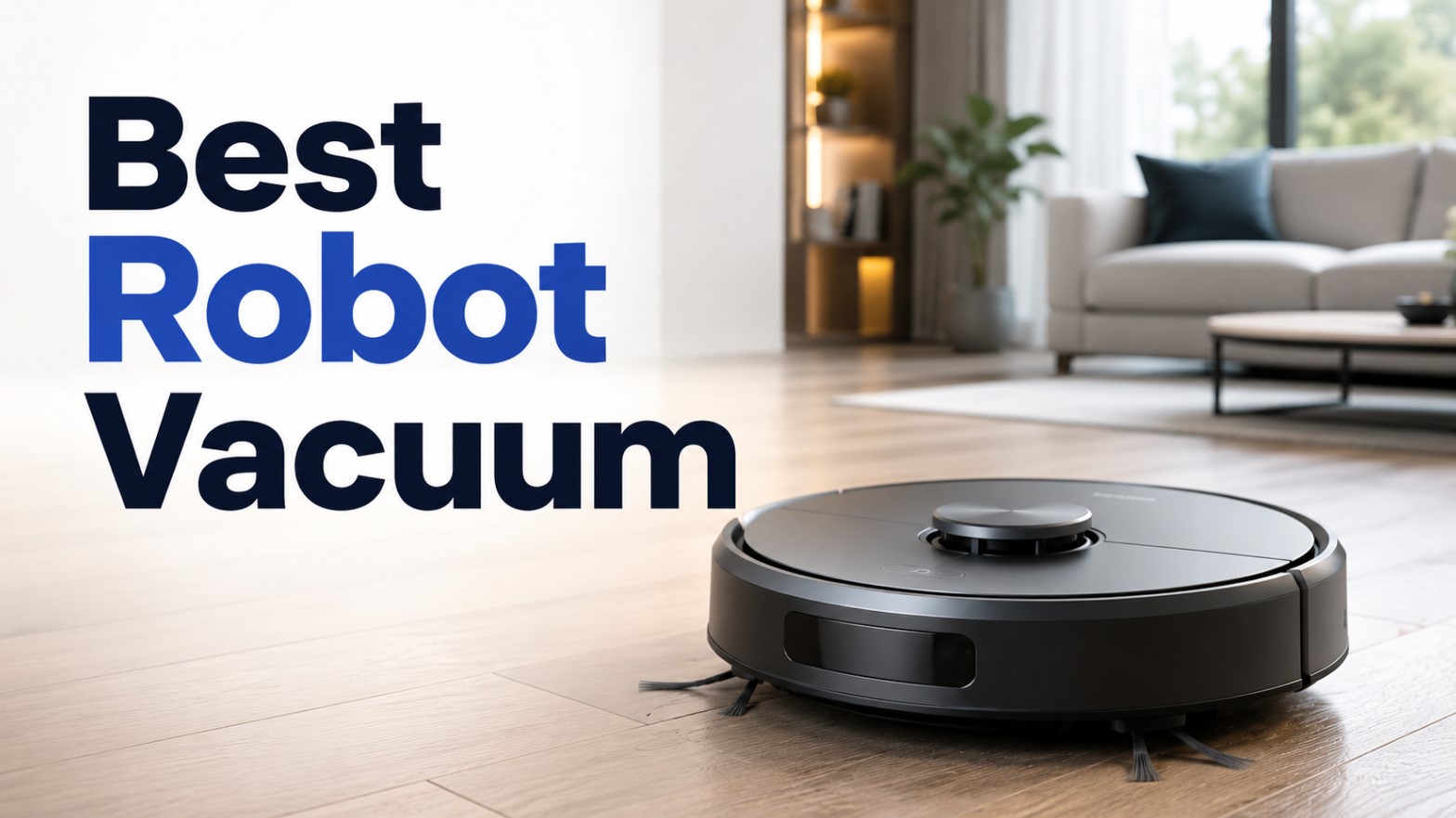
Robot vacuums have quietly become one of the most genuinely useful smart home purchases available today. They won’t replace a deep clean, but as a daily maintenance tool — tackling dust, crumbs, and pet hair between manual sessions — a great robot vacuum is transformative. The challenge is knowing which one to buy in a market that now spans dozens of brands and hundreds of models at wildly different price points.
This guide cuts through the noise. Based on data from independent testing labs — including Vacuum Wars, RTINGS, Modern Castle, and Consumer Reports — here are the best robot vacuums of 2026 for every budget and home type, along with clear guidance on what actually matters when you’re choosing one.
What to Look for in the Best Robot Vacuum
Before jumping to specific model recommendations, it helps to understand the four factors that independent testers consistently identify as most predictive of real-world performance:
Navigation Technology The best robot vacuums use LiDAR (laser-based) mapping to build accurate floor plans of your home, navigate methodically, and avoid missing spots. Camera-based navigation is cheaper but less reliable in low light. Older bump-and-bounce navigation (common on budget models) is the least efficient.
Suction Power and Brush Roll Design Raw suction (measured in Pascals, or Pa) matters — but so does the brush roll. Rubber brush rolls are significantly better than bristle brushes for pet hair because they resist tangles. Some premium models now use anti-tangle technology that actively cuts hair during operation.
Self-Emptying Dock A self-emptying base station is no longer a luxury. It collects debris from the robot’s dustbin automatically, meaning you can go weeks — sometimes 30 to 60 days — without manually emptying anything. For pet owners especially, this single feature changes the experience dramatically.
Mopping Capability Many 2026 models combine vacuuming and mopping in one unit. The best combo units automatically lift the mop pad when they detect carpet, preventing soaking. If you have hard floors and carpets mixed throughout your home, a vacuum-mop combo is worth serious consideration.
The Best Robot Vacuums of 2026
Best Overall: Dreame X60 Max Ultra Complete (~$1,499)
The Dreame X60 Max Ultra Complete earned the top position in Vacuum Wars’ independent rankings in March 2026, displacing the Dreame L50 Ultra after a multi-month run at number one. It combines a redesigned slim body with across-the-board improvements in obstacle detection, pet hair handling, and cleaning power.
In independent testing, it achieved a Vacuum Wars score of 4.08 — the highest of any robot vacuum currently ranked. Its obstacle avoidance system reliably identifies and navigates around charging cables, pet toys, shoes, and other floor-level clutter that cheaper models simply roll over or get stuck on.
Honest caveats: navigation efficiency and battery life score below average relative to its price tier, and it carries a premium price tag. But for buyers who want the most consistently high-performing robot vacuum available right now and don’t mind the cost, the X60 is the current benchmark.
Best for: Large homes; households wanting top-tier performance across all floor types.
Best Value: Dreame L50 Ultra (~$799)
After aggressive spring 2026 pricing reduced its cost significantly from its original retail price, the Dreame L50 Ultra became the standout value pick in the market. It held the number one overall position at Vacuum Wars for several consecutive months before the X60’s release, and it remains an exceptional robot vacuum by any measure.
Its self-emptying dock, LiDAR navigation, and strong performance on both carpet and hard floors make it a practical pick for the vast majority of households. The price-to-performance ratio at its current sale price is difficult to beat.
Best for: Most homes; buyers who want flagship performance without flagship pricing.
Best for Pet Hair: Roborock S8 MaxV Ultra
For pet owners, the Roborock S8 MaxV Ultra is the top recommendation from RTINGS, one of the most rigorous independent testing organizations in consumer electronics. Its dual rubber brush rolls are specifically designed to resist the hair tangles that make many robot vacuums a maintenance headache in pet households.
Consumer Reports’ testing further confirms that the best robot vacuums for pet hair typically come equipped with a turbo or booster mode, and the S8 MaxV Ultra delivers on this front. The auto-empty station holds weeks of fur, and the auto-mop lift feature keeps carpet dry when the unit transitions from hard floors.
Vacuum Wars’ separate pet hair testing found something counterintuitive worth knowing: hybrid robot vacuums with integrated mopping features often perform worse on carpet pet hair pickup, because their brush rolls sit higher off the ground to prevent mop pads from dragging. If pet hair on carpet is your primary concern, a dedicated vacuum-only unit can sometimes outperform a pricier combo.
Best for: Multi-pet households; homes with a mix of hard floors and carpet.
Best Budget Pick: MOVA P10 Pro Ultra (~$300 and under)
At the budget tier — generally under $300 — options have improved substantially in 2026. The MOVA P10 Pro Ultra earned a spot in Vacuum Wars’ top 20 rankings and provides LiDAR navigation and solid cleaning performance at a price point that would have bought only basic bump-and-turn functionality a few years ago.
For buyers not ready to commit to a premium robot vacuum, the eufy L60 is another standout: in Vacuum Wars’ pet hair testing, it achieved 100% pet hair pickup on carpets consistently — an impressive result for a budget-positioned unit.
Consumer Reports also notes that the Eufy C10 proves that low price does not equal low performance, handling pet hair effectively and coming with an automatic emptying station.
Best for: First-time robot vacuum buyers; smaller homes; apartments; renters.
Best Premium Newcomer: Dyson Spot+Scrub AI
Dyson entered the robot vacuum market in earnest in 2026 with the Spot+Scrub AI — the brand’s first true all-in-one robot vacuum, adding mopping, AI obstacle avoidance, and a bagless auto-empty dock. In Vacuum Wars’ independent testing, it impressed with top-tier obstacle avoidance and excellent bin performance, particularly for pet hair.
It is worth noting that Dyson has confirmed the Spot+Scrub AI uses a third-party motor and LiDAR navigation rather than Dyson’s proprietary technology — a strategic shift that marks a new direction for the brand. Core cleaning metrics showed mixed results in Vacuum Wars’ lab, so it is not yet the outright top performer, but its obstacle avoidance is among the best tested and it represents a meaningful entry from one of the most recognized names in floor care.
Best for: Dyson loyalists; buyers who prioritize obstacle avoidance; hard floor-dominant homes.
How to Choose the Right Robot Vacuum for Your Home
Floor type matters most. Homes with primarily hard floors (tile, hardwood, vinyl) have the widest range of good options. Deep-pile or shag carpeting is more demanding — look for models with higher suction ratings and rubber brush rolls.
Consider your home’s layout. Homes with many rooms, narrow hallways, and lots of furniture benefit most from LiDAR navigation. If you live in a studio apartment or a single open-plan space, cheaper camera-based or even random-navigation models may be sufficient.
Self-emptying is worth the upgrade. The difference between emptying a robot vacuum’s dustbin after every run versus every six weeks is significant. If your budget allows, choose a model with an auto-empty dock.
Be realistic about mopping. Robot mops have improved, but they are best understood as a floor refresher — effective for light cleaning and sticky marks — rather than a substitute for hand-mopping. Don’t pay a premium for mopping capability if you only have carpet.
Security is an emerging consideration. Vacuum Wars flagged in May 2026 that recent incidents involving robot vacuum brands including Ecovacs and Roomba have raised serious questions about data privacy and the potential for connected robot vacuums to be hacked. If privacy is a concern, research a brand’s security track record and data policies before purchasing.
Robot Vacuum Price Tiers at a Glance
| Tier | Price Range | What You Get |
|---|---|---|
| Budget | Under $300 | LiDAR navigation, basic self-empty, solid suction |
| Mid-Range | $300–$600 | Better obstacle avoidance, improved mopping, smarter app |
| Premium | $600–$1,000 | High suction, auto-empty, reliable mop lift on carpet |
| Flagship | $1,000–$1,500+ | Top obstacle avoidance, AI features, best pet hair performance |
Frequently Asked Questions
Are robot vacuums worth it in 2026?
Yes — for daily maintenance. They don’t replace deep cleaning, but they dramatically reduce how often deep cleaning is needed. For households with pets or high-traffic areas, the value is especially clear.
How often should a robot vacuum run?
Most households benefit from daily or every-other-day runs, particularly in pet homes. With a self-emptying dock, you can schedule runs and largely forget about them for weeks at a time.
Do robot vacuums work on thick carpet?
Higher-end models with powerful suction (10,000 Pa and above) handle medium-pile carpet well. Very thick or high-pile rugs remain a challenge for most robot vacuums; some models allow you to set no-go zones to avoid them.
How long do robot vacuums last?
Quality robot vacuums from major brands typically last three to five years with regular maintenance. Brush rolls and filters are the components that need the most frequent replacement.
The Bottom Line
The best robot vacuum for you depends on your floor type, home size, budget, and whether you have pets. In 2026, the Dreame X60 Max Ultra Complete leads overall rankings, the Dreame L50 Ultra offers the strongest value at its current price, the Roborock S8 MaxV Ultra is the go-to for pet owners, and the eufy L60 is a proven budget performer that punches well above its price point.
Whatever your budget, the robot vacuum category in 2026 offers genuinely excellent options that weren’t available even two years ago. The key is matching the right model to your actual home — not simply buying the most expensive one on the shelf.
